


MINT SQUARE ARTICLE
How to Plan a Programmatic DOOH Campaign
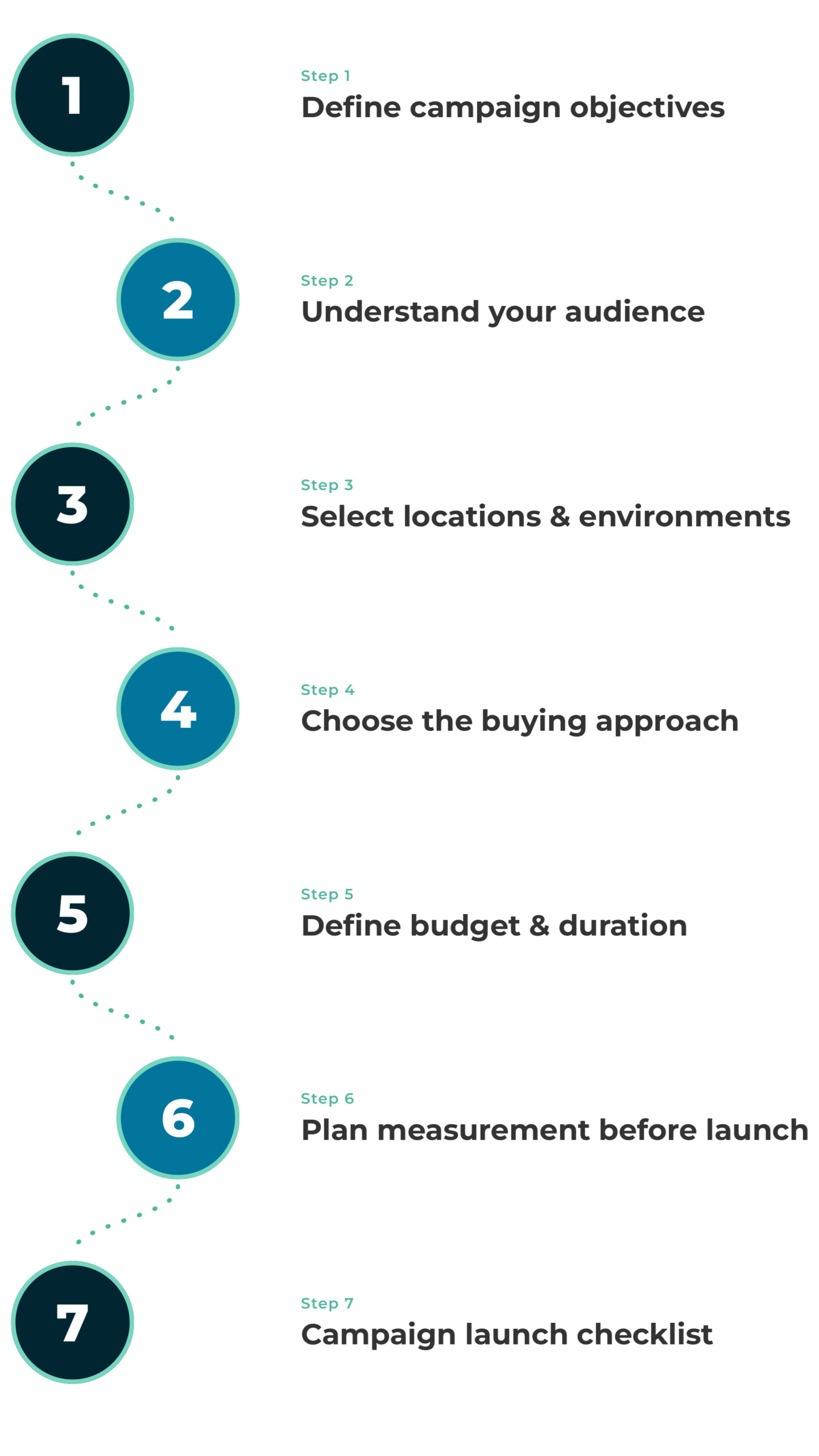
In 7 Steps: How to Plan a Programmatic DOOH Campaign
How to Plan a Programmatic DOOH Campaign
Once you’ve worked out that programmatic DOOH belongs in a media plan, the next question is how to actually plan it. That’s where a lot of campaigns lose value before they’ve even launched, not because the channel doesn’t work, but because the planning happened in the wrong order.
None of the seven steps below are unique to DOOH advertising. What is specific to this channel is how much the order matters. Location and creative decisions are hard to unwind once media is booked, so working through them in sequence, not in parallel, is what separates a campaign that performs from one that needs a mid-flight rescue.
Step 1: Define campaign objectives
Start with one primary objective, stated in a way that can actually be measured. “Build awareness” isn’t specific enough to plan around. “Increase unaided brand awareness among X audience in Y market by the end of the flight” is. Translate that into one primary KPI and a small set of supporting KPIs. Everything downstream, locations, creative, measurement, should trace back to this single sentence.
Step 2: Understand your audience
Describe the audience in behavioural terms, not just demographics. Where do they commute, shop, train, travel? Combine what the client already knows from past campaigns and customer profiles with what the platform and data partners can add.
How you locate that audience depends on the brief. When the time and place are already known, a football match, a trade fair, the morning commute, plan directly around that moment. For audiences that are more dispersed, audience-first planning changes the game. Rather than guessing which neighbourhoods your audience frequents, audience-planning tools score available screens by how strongly your defined audience indexes near each one throughout the day, and the plan gets built around where that audience actually concentrates. Location-intelligence partners can tell you, before you buy, who is likely to pass a given site, using movement and spatial data mapped to each location.
The output of this step should be an audience the plan can be built around, not just a persona slide. Screens are the output of steps 1 and 2, never the input.
Step 3: Select the right locations and environments
Every environment carries a different dwell time and mindset, and matching the message to the moment matters as much as matching the audience to the location.
This is where the breadth of modern DOOH inventory actually pays off, since out of home advertising today spans far more than roadside billboards.
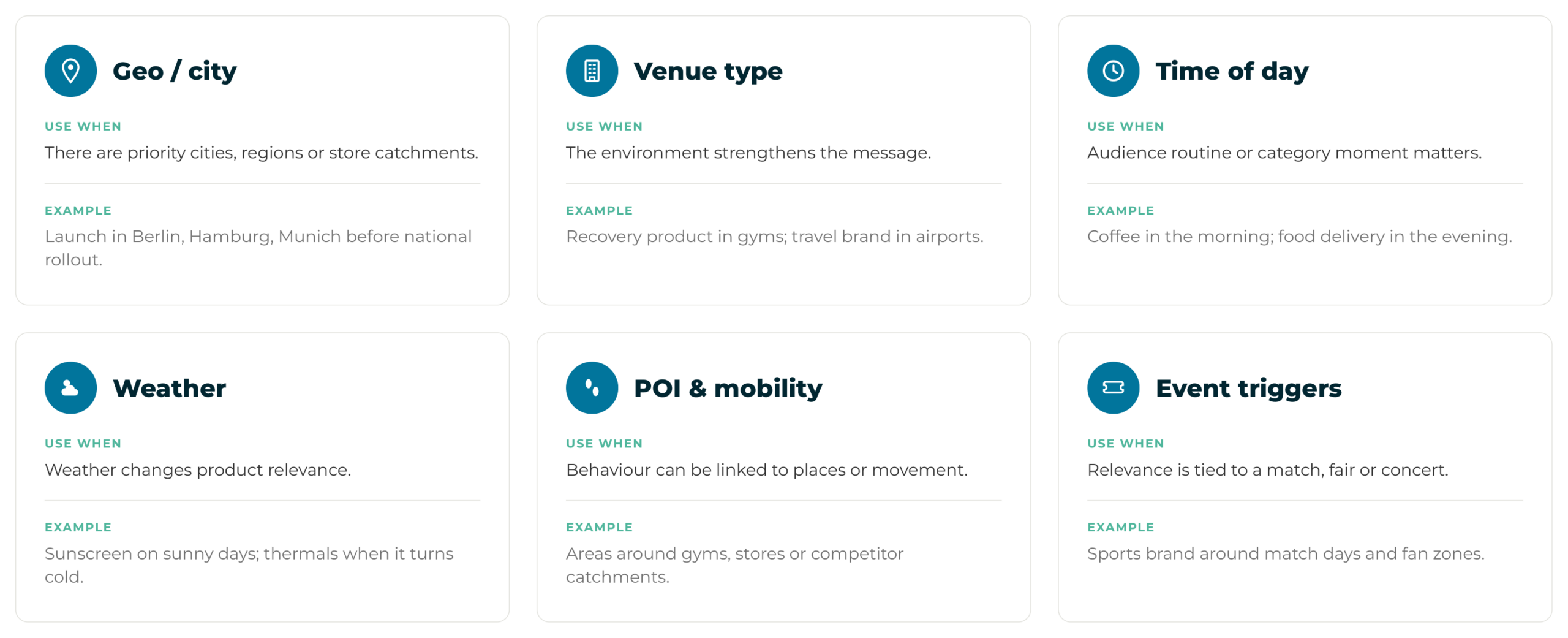
Targeting levers should make the plan more relevant, not needlessly smaller. The main ones are geography and city selection, venue type, time of day, day of week, weather, POI and mobility data, event triggers, curated inventory packages, and audience-reach planning.
A note on weather targeting specifically: it’s one of the most intuitive levers in DOOH advertising, but it isn’t a universal checkbox. Availability, data source, cost and setup differ by DSP, SSP and market. Confirm early which weather data provider the platform uses, whether triggering happens at the buying level or the creative level, and whether creative variants exist for every condition you’re triggering on. Budget pacing needs thought too, since a campaign that only serves when it rains needs a plan for a dry month.
It’s tempting to open a planning conversation by browsing an exciting site list a media owner has shared. Resist it. Campaigns planned screen-first are the ones most likely to need a mid-flight rescue.
Step 4: Choose the appropriate buying approach
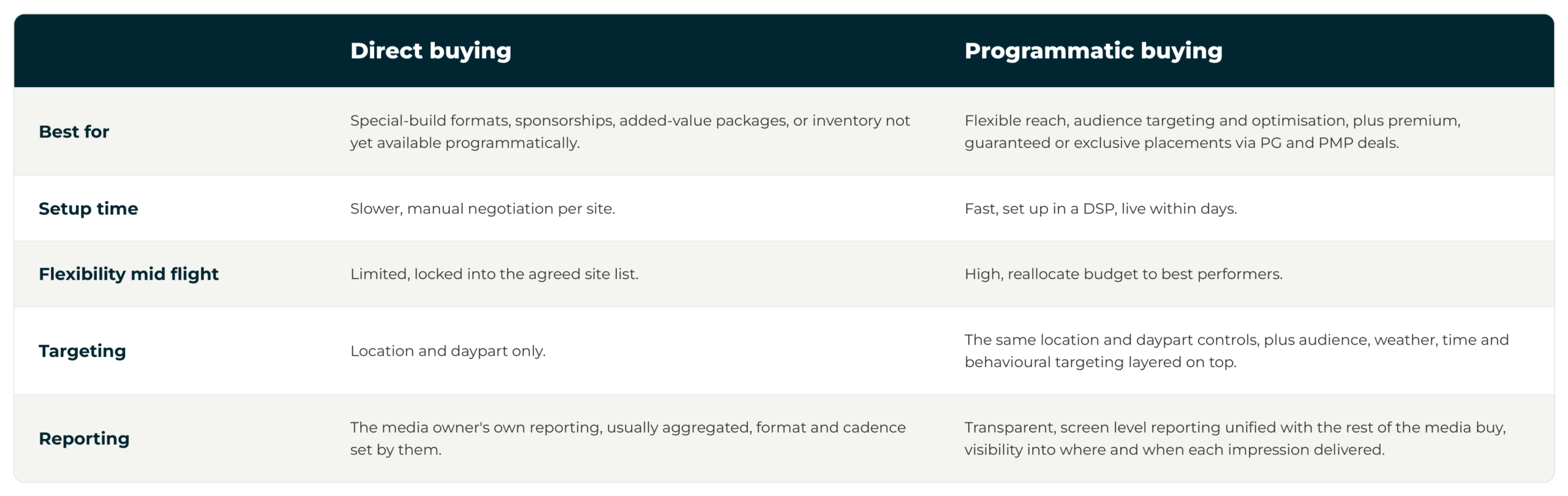
Direct and programmatic buying aren’t mutually exclusive. Premium, guaranteed or exclusive placements are available either way, since programmatic can secure them too through private marketplace (PMP) deals and, where the SSP and media owner support it, Programmatic Guaranteed (PG).
Direct buying still makes sense for bespoke executions, sponsorships, or inventory that isn’t yet available programmatically. Many strong campaigns use both, choosing based on what the campaign actually needs rather than defaulting to one or the other.
Step 5: Define budget and campaign duration
Allocate budget based on the reach, frequency, environment quality and duration the objective needs, not a default four-week flight. A launch moment may need a short, dominant burst. A consideration campaign for a long purchase cycle, automotive or B2B for example, needs sustained presence over months to build meaningful frequency.
Flights shorter than two to three weeks rarely build enough frequency to move brand metrics. Treat anything shorter as a tactical burst, not an awareness campaign, and avoid spreading budget so thin it becomes invisible in market.
Step 6: Plan measurement before launch
Decide the KPIs, the baseline, and exactly how each will be tracked before the campaign goes live, not when the first report is due. This is the step most commonly skipped, and the hardest to retrofit.
Two things specifically must be set up before launch: any brand-lift study, since it needs a pre-campaign baseline, and any store-visit measurement, which requires the client’s list of POIs to be turned into precise building-footprint polygons with the measurement feed connected to the DSP before the first impression serves. You cannot add either after the flight has ended.
Step 7: Campaign launch checklist
Before going live, confirm creative is approved, trafficked and tested on the correct specs for each screen type; targeting and geography are double-checked against the media plan; tracking pixels and measurement integrations are live and verified; and internal stakeholders and the client are briefed on what “live” looks like and when the first check-in will happen.
The planning worksheet
A quick way to force this thinking into the right order is a one-page worksheet: business objective, audience, where that audience can be reached, the moment, the message, the role DOOH plays, which channels support it, how success will be measured, and what could block delivery. Fill it in before touching inventory, not after.
We’ve turned this exact worksheet into a free downloadable checklist if you want a version to run your next brief through.

DOOH Campaign Planning Checklist
Download PDF: A one-page checklist to run before every campaign launch.
Three campaign blueprints
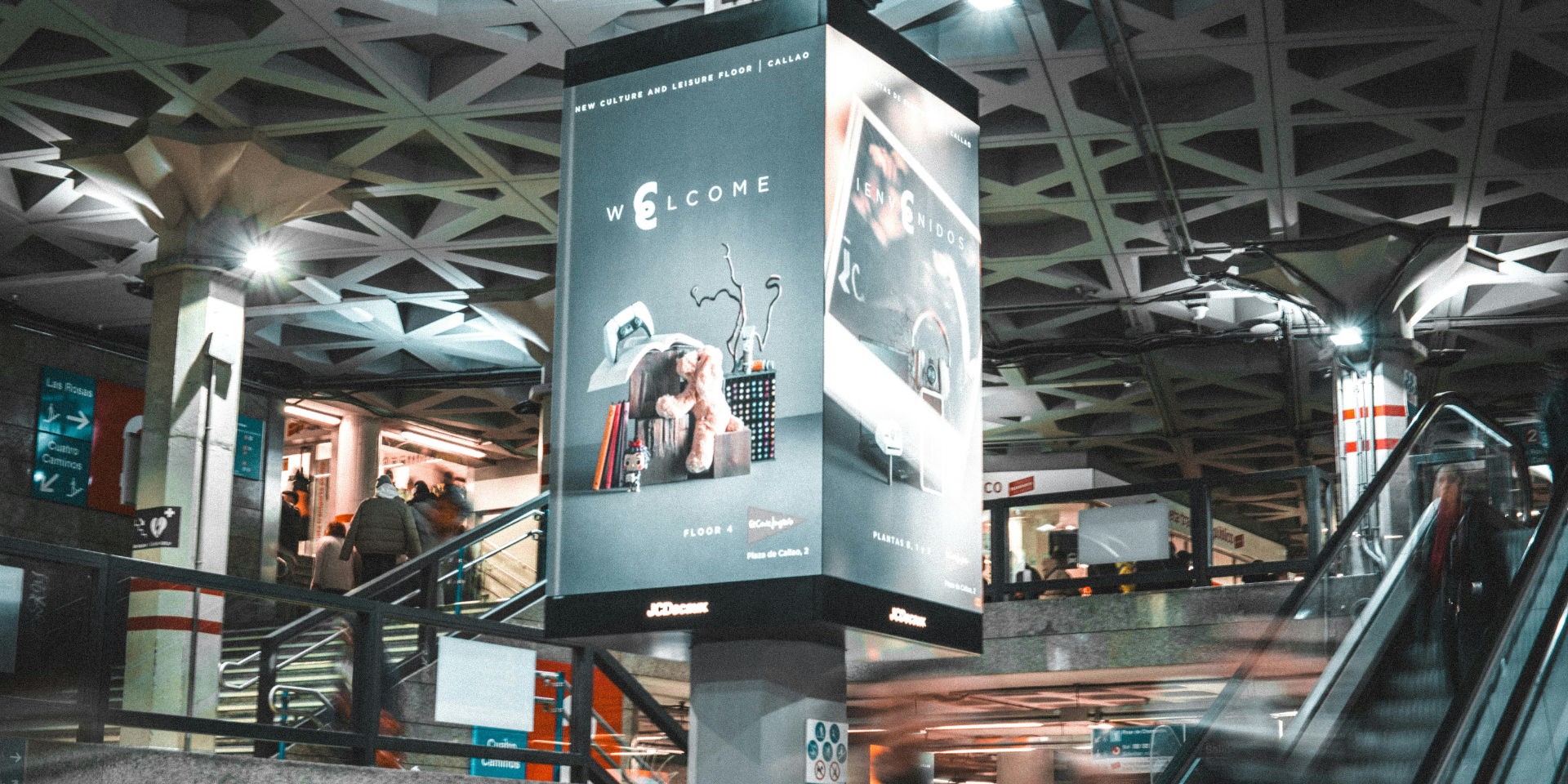
The same seven steps produce very different campaigns depending on the objective. A retail product launch might pair DOOH in retail and transit environments with display retargeting, targeting adults 25 to 45 near participating stores, measuring reach in the catchment and store-visit uplift. An automotive brand awareness campaign might combine roadside, business district and airport DOOH with CTV for storytelling, targeting in-market buyers and higher-income commuters, measuring reach, brand lift and dealership-visit proxy. A B2B event promotion might run DOOH across business districts, airports and transit alongside LinkedIn and email, targeting senior decision-makers, measuring registrations and share of voice among a target account list.
Use them as starting templates, not fixed media plans. The objective changes the mix every time.
Key takeaways
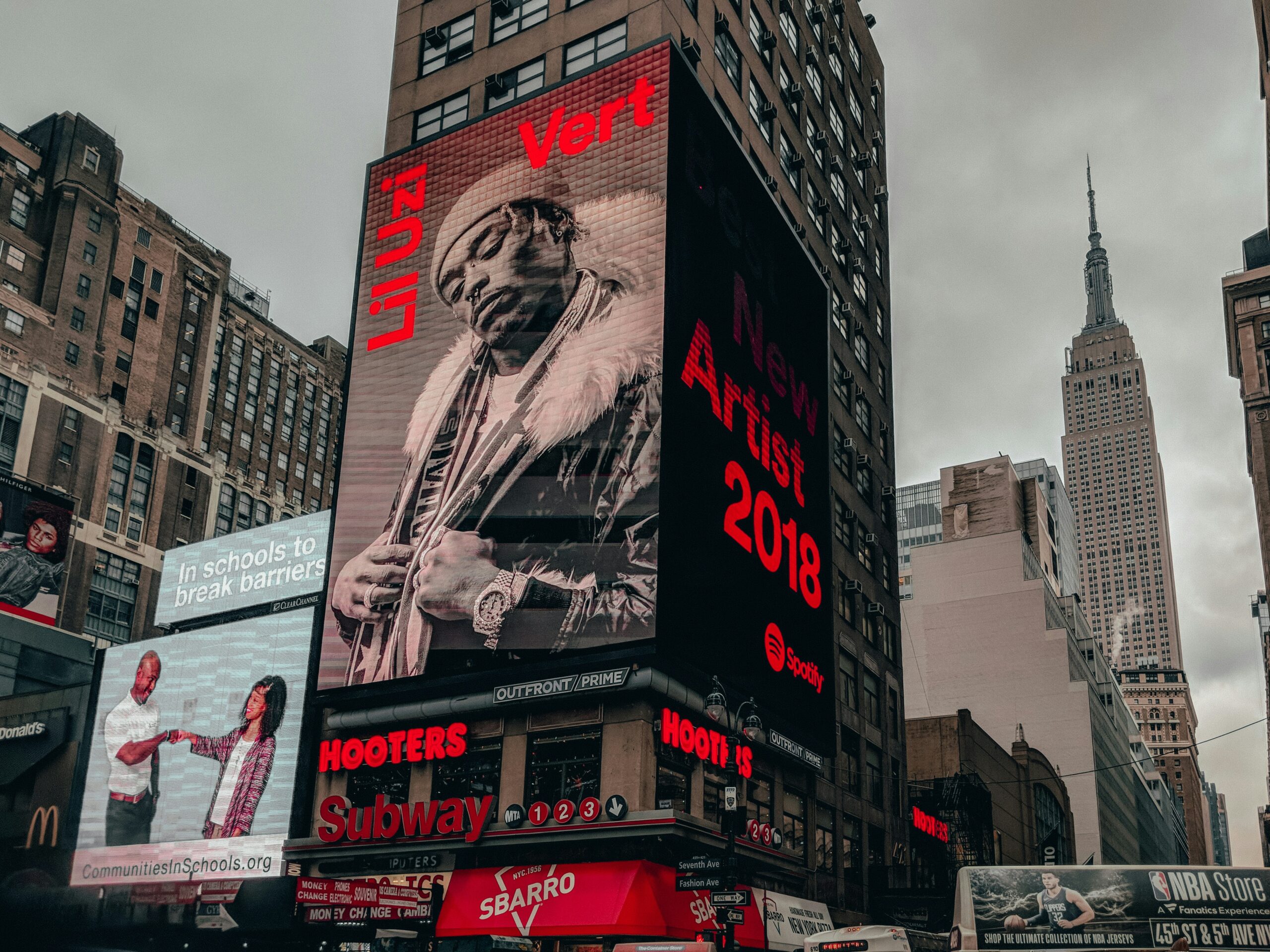
Follow the seven steps in order, since location and creative are expensive to unwind once media is booked. Plan audience-first, letting audience and location data tell you where your audience concentrates rather than guessing at a screen list. Treat direct and programmatic buying as complementary, not competing. Match duration to the objective, since flights under two to three weeks rarely move brand metrics. And set up measurement, brand-lift baselines and footfall polygons, before launch, never after.