


MINT SQUARE ARTICLE
How to Measure DOOH Beyond Impressions
An impression tells you the ad played. It doesn't tell you it worked.
How to Measure DOOH Beyond Impressions
Impressions are the easiest number any DOOH platform hands back, and that’s exactly the problem. An impression only confirms the ad played on a screen while someone was estimated to be nearby, it says nothing about whether they noticed it, remembered it, or did anything because of it. Proper DOOH measurement looks past impressions to viewability, dwell time, footfall and store visit measurement, brand lift, and attribution back to a business outcome, matched to whatever the campaign was actually trying to achieve.
Why impressions alone fall short
An impression in DOOH is usually a modelled estimate, not a confirmed view. It’s built from average foot traffic or vehicle counts near a screen during the time a creative was live, multiplied by a plays count. That’s a reasonable proxy for reach, but it collapses a lot of nuance into one number. It can’t tell a client whether the screen was visible from where people were actually standing, whether anyone looked at it for long enough to register the message, or whether the campaign changed anything once someone walked away.
Reporting only on impressions tends to work fine until a client asks the obvious follow up question, so what did we actually get for this. That’s usually the moment DOOH mistake 4 and mistake 6 from the common mistakes list show up in practice, impressions reported by default, and measurement bolted on too late to answer the question properly.
Viewability and dwell time
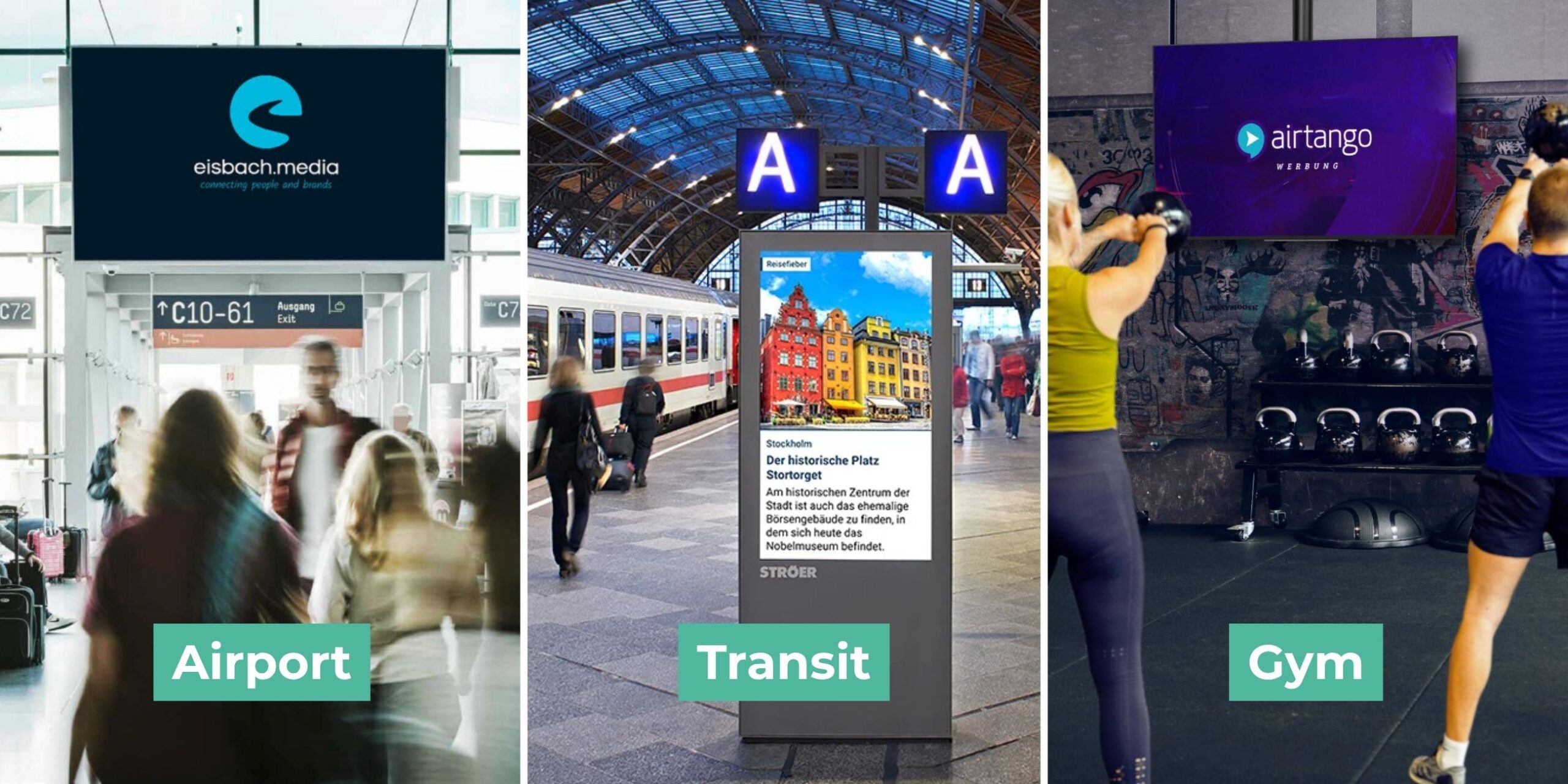
Viewability asks a narrower question than reach: was the screen actually visible to the audience the campaign was modelled against, given its height, angle, and whatever else was competing for attention nearby. Dwell time asks how long someone was plausibly in a position to see it. A commuter walking past a bus shelter screen has a very different dwell time to someone waiting at a gate in an airport, and a campaign’s expectations should reflect that difference rather than treating every DOOH placement the same.
Neither of these numbers is as easy to pull as impressions, they usually depend on the media owner’s own measurement partner or a third party audience measurement provider, but they’re a meaningfully better proxy for whether the creative had a real chance to land.
Footfall and store visit measurement
For campaigns with a physical outcome in mind, a retail chain, a car dealership, a restaurant group, footfall measurement is usually the metric that actually matters to the client, not impressions. This works by matching mobile location data, anonymised and aggregated, against people who were exposed to a DOOH campaign, then checking whether they subsequently visited a relevant location within a defined window.
This kind of store visit measurement needs to be set up before the campaign launches, not after, since it usually requires a measurement partner to be added to the plan, a control group defined, and tracking windows agreed in advance. Trying to retrofit it once a campaign is already live rarely works cleanly.
Brand lift and awareness metrics
Not every DOOH campaign has a store to walk into. Awareness and consideration campaigns are better measured through brand lift studies, usually a short survey run against an exposed group and a matched control group, asking about recall, message association, or purchase intent. This is slower and more expensive to set up than pulling an impressions report, but it’s the only way to actually answer whether a DOOH campaign built awareness rather than just delivered plays.
Attribution: connecting DOOH to outcomes elsewhere
DOOH rarely runs alone, and its effect often shows up in another channel’s numbers rather than its own. A spike in branded search after a DOOH flight goes live, a lift in site traffic from a specific postcode, an uptick in app installs during a campaign window, all of these are forms of DOOH attribution, even though the conversion technically happened somewhere else. This is where treating DOOH as a standalone channel, mistake 5 from the common mistakes list, actively costs a campaign credit it should be getting. Measurement plans that only look at DOOH’s own numbers miss this entirely.
Matching metrics to the objective
None of the metrics above are universally right, they’re right for a specific objective. An awareness campaign should lean on viewability, dwell time and brand lift. A campaign built to drive footfall should lean on store visit measurement and incremental visit lift. A campaign supporting a broader push should lean on attribution signals in other channels. Picking metrics because they’re available rather than because they answer the brief’s actual question is how impressions ends up as the default, not because it’s the right number, but because it’s the easiest one to reach for.
Building measurement in from day one
The single biggest fix here isn’t a smarter metric, it’s timing. Primary and supporting KPIs need to be written into the brief before launch, along with the measurement partner, sample size and methodology. Once a campaign is live, some of the better options close off entirely, a control group can’t be added retroactively, and a brand lift survey needs to be fielded before and during the flight, not after it ends. Treat measurement setup as a hard gate before launch, not a nice to have added once the wrap report is due.
The DOOH KPI Cheat Sheet
Download PDF: Use this sheet to pick the metrics that actually prove your objective.
Frequently asked questions: DOOH
Impressions are a modelled estimate of how many people were near a screen while it played, not a confirmation anyone saw or responded to it. They can’t answer whether a campaign built awareness or drove a real outcome, which is usually what the client actually wants to know.
It’s the process of matching anonymised, aggregated mobile location data against people exposed to a DOOH campaign, then checking whether they visited a relevant physical location afterwards. It needs a measurement partner and control group set up before the campaign launches.
Usually through a short survey run against an exposed group and a matched control group, asking about recall, message association or purchase intent, to isolate the effect of the campaign from everything else happening at the same time.
Yes. A DOOH flight can show up as a spike in branded search, a lift in site traffic from a relevant area, or an increase in app installs during the campaign window, even though the eventual conversion happened somewhere else. Measurement plans that only look at DOOH’s own numbers miss this effect.
Before launch, not after. KPIs, the measurement partner, sample size and methodology all need to be agreed and built into the brief ahead of time, since several of the better measurement options, like a control group or a brand lift survey, can’t be added once the campaign is already live.