


MINT SQUARE ARTICLE
What Is Digital Out of Home (DOOH)?
The billboard has gone digital. Here’s what that means.
What Is DOOH? A Beginner’s Guide to Digital Out-of-Home Advertising
You already know out-of-home advertising. It’s the billboard on the motorway, the poster in the station, the screen above the escalator. What’s changed isn’t the medium, it’s how that ad space gets bought, and increasingly, how smart it’s gotten about who’s standing in front of it.
Take a station platform screen. On a cold Tuesday morning, it’s running a hot coffee ad. By Thursday, when the weather’s turned mild, it’s showing a cold drink instead. Take the same route on a Saturday, when the platform’s full of families instead of commuters, and the whole ad sequence looks different again. Same commute, same screen, different ad. Because it now responds to the conditions around it, rather than sitting there for the length of a print run.
That responsiveness is the whole story of digital out-of-home advertising. Let’s unpack it properly.
DOOH vs OOH: three things people mean when they say “OOH”
“Out-of-home advertising” gets used as a catch-all, but OOH advertising actually covers three distinct types, and each one works differently, both commercially and operationally.
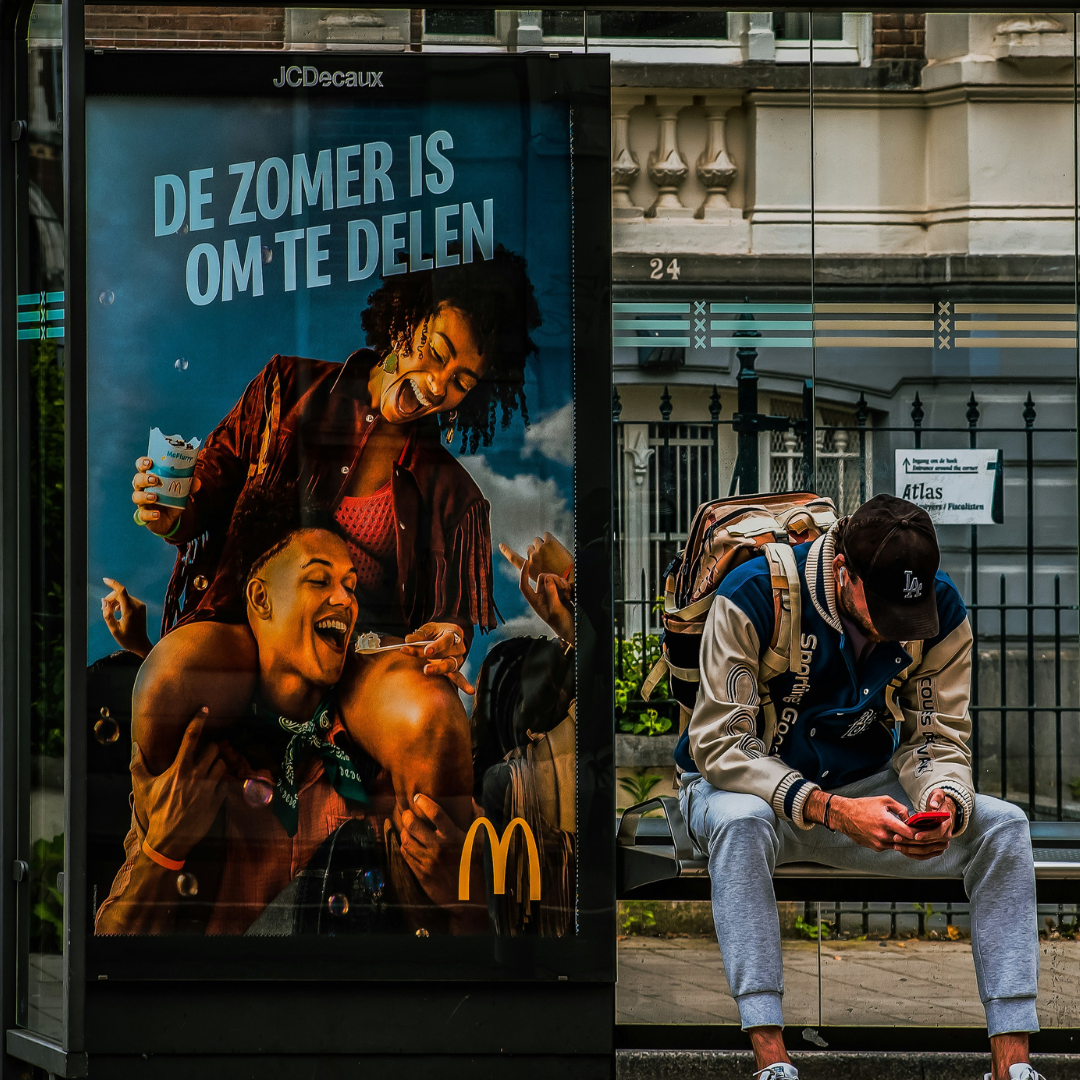
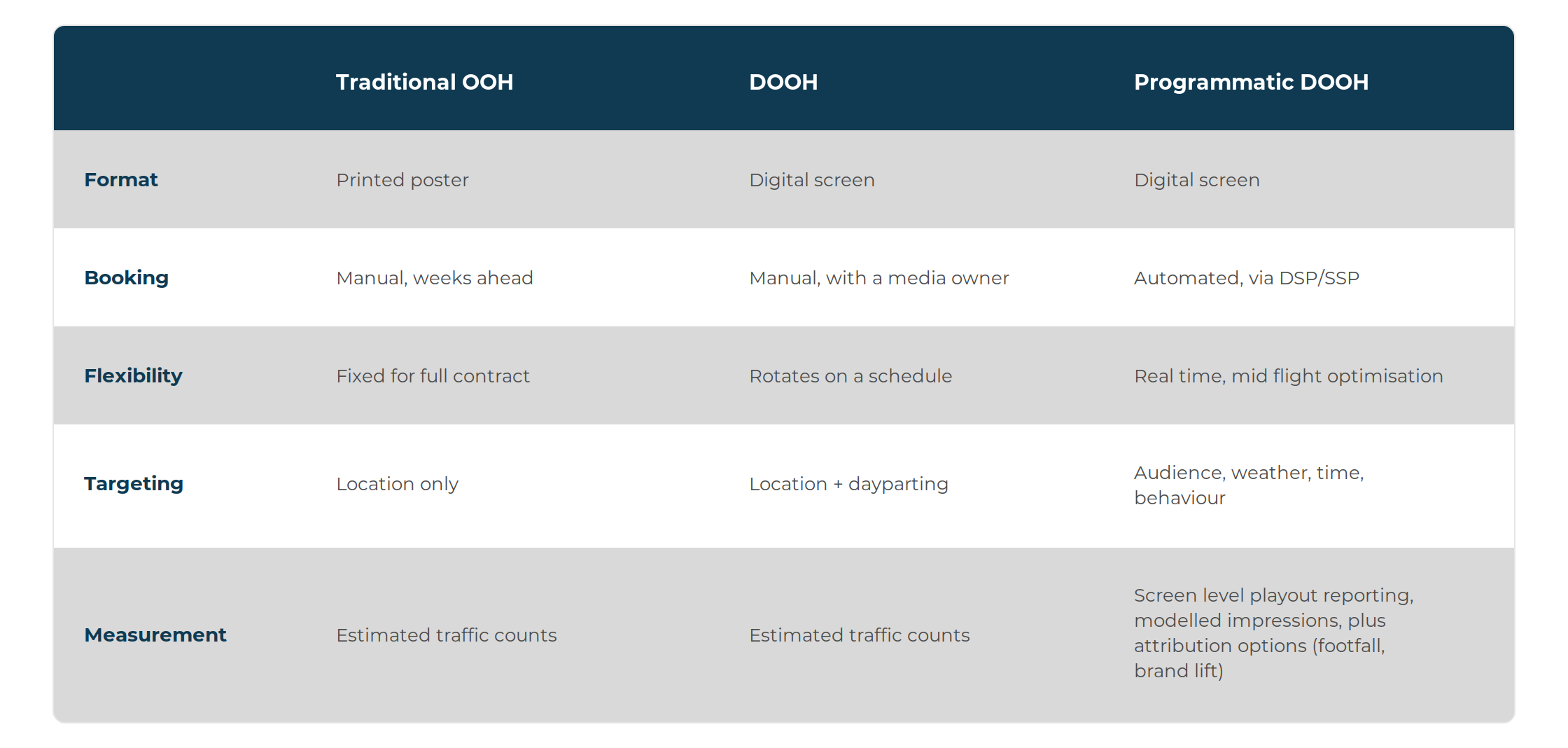
- Traditional OOH is the format you grew up with: printed posters, classic billboards, bus-shelter panels. Booked weeks or months out, printed once, fixed for the whole contract. Once it’s up, it’s up.
- DOOH (Digital Out-of-Home) swaps the printed poster for a digital screen in the same physical spot. Content can now rotate on a schedule, and multiple advertisers can share the same screen. But the buying itself is still manual. You’re negotiating site by site with a media owner’s sales team.
- Programmatic DOOH (pDOOH) is where the buying process itself gets automated. Instead of negotiating each site individually, you set your targeting (location, venue type, time of day, budget, and on some platforms, audience) inside a demand-side platform (DSP). The DSP then bids on and buys the impressions that match, in real time, the same way display or video advertising already gets bought online.
So what is programmatic DOOH, in one sentence?
Programmatic DOOH is digital out-of-home ad space bought and sold through the same DSP/SSP infrastructure that already powers programmatic display, video and CTV, so outdoor screens can be planned, targeted, activated and measured like any other digital channel. It’s not a new line item bolted onto the media plan. It’s the same billboard, transit panel or mall screen your client already trusts, just bought a lot more efficiently.
Where can you find this inventory?
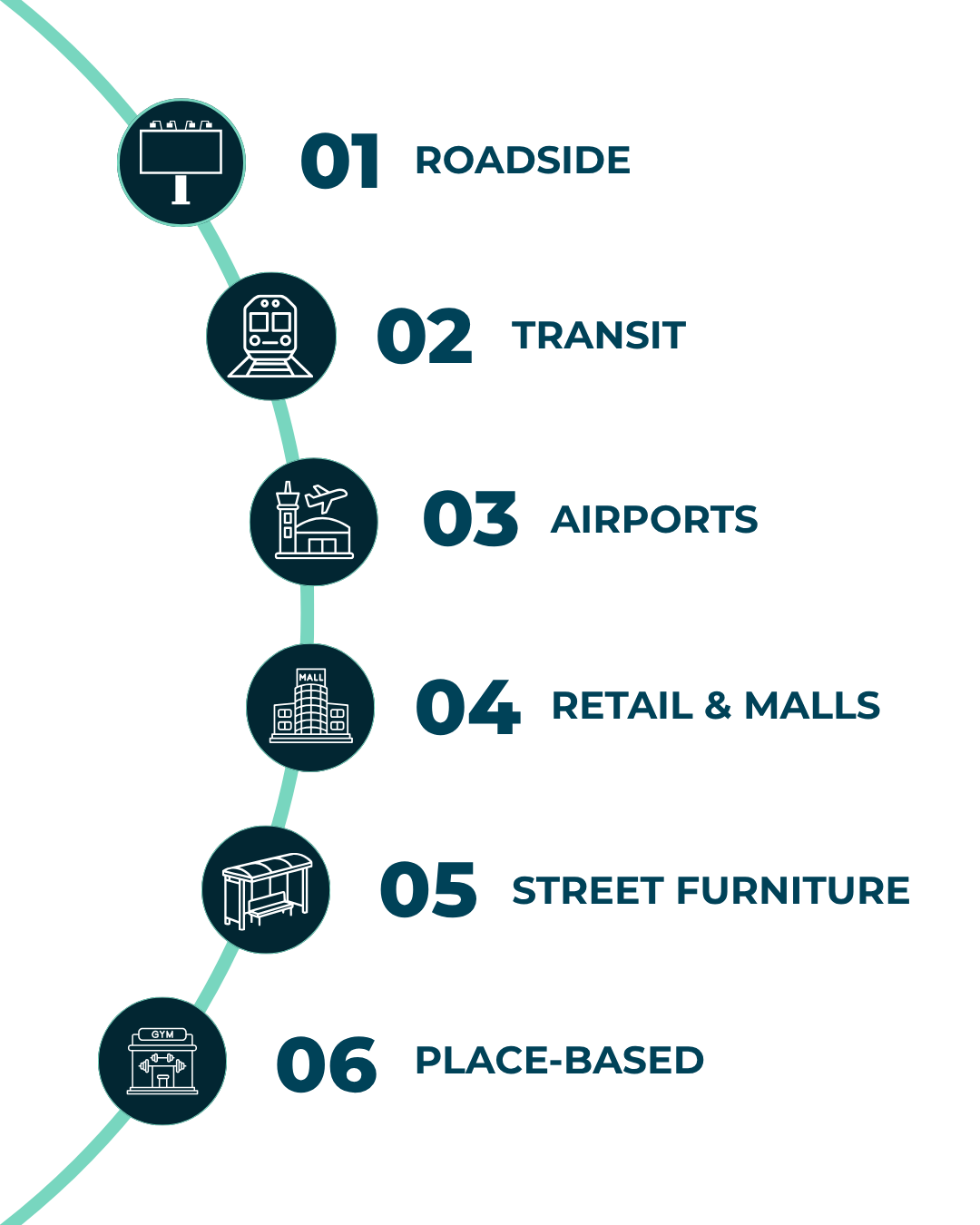
DOOH inventory spans a wide range of physical environments, each with its own audience, dwell time and mindset.
Roadside – Large format digital billboards on major roads, seen briefly and at a distance. Best for simple, high impact messages.
Transit – Screens in stations, on platforms, and on buses and trams. High frequency of exposure for regular commuters.
Airports – Premium, high dwell environments where travellers are relaxed and open to longer form messaging.
Retail & shopping malls – Screens in or around stores, closest to the moment of purchase.
Street furniture – Bus shelters, kiosks and phone box style panels, usually pedestrian level and closer in.
Place-based – Gyms, cinemas, elevators, petrol stations and similar venues, useful for narrow contextual targeting.
How a programmatic impression actually happens
If you’re new to the mechanics of programmatic DOOH advertising, here’s the simplified version:
- A media owner makes screen inventory available programmatically through a supply-side platform (SSP).
- You set targeting, budget and creative in a DSP, likely the same one you already use for display, video or CTV.
- In real time, the platform matches your campaign’s criteria to the most relevant available screens, at the most relevant moments.
- The ad plays, an impression is logged, and performance data flows back into the same dashboard as the rest of your campaign, ready to optimise and report on.
The forces above explain why the category is growing. This part is about what it means for your client’s budget and your day to day workflow. Programmatic DOOH advertising delivers six concrete advantages over the manual, site by site buying of traditional and digital out-of-home advertising.
The takeaway
OOH, DOOH and programmatic DOOH look the same on the screen. The booking mechanics behind them are not. Programmatic DOOH is the out-of-home advertising your clients already trust, just bought through the same DSP infrastructure as the rest of their digital media. The real value isn’t the screen on its own. It’s the combination of location, moment, audience behaviour and message, all working together in your DOOH inventory.