MINT SQUARE ARTICLE
5 Reasons AdvertisersAre Adding DOOH ToTheir Media Mix
The screen hasn't changed. The buying has.
5 Reasons Why Advertisers are Adding Programmatic DOOH to their Media Mix
Programmatic DOOH isn’t a niche test and learn tactic anymore, it’s becoming a standard line item, and fast. This isn’t just advertisers discovering the channel on their own either. The shift is being pushed from several directions at once, supply, technology and proof all moving together, which is exactly why it’s happening faster than most other channel shifts tend to. Here’s what’s actually driving it, at the industry level:
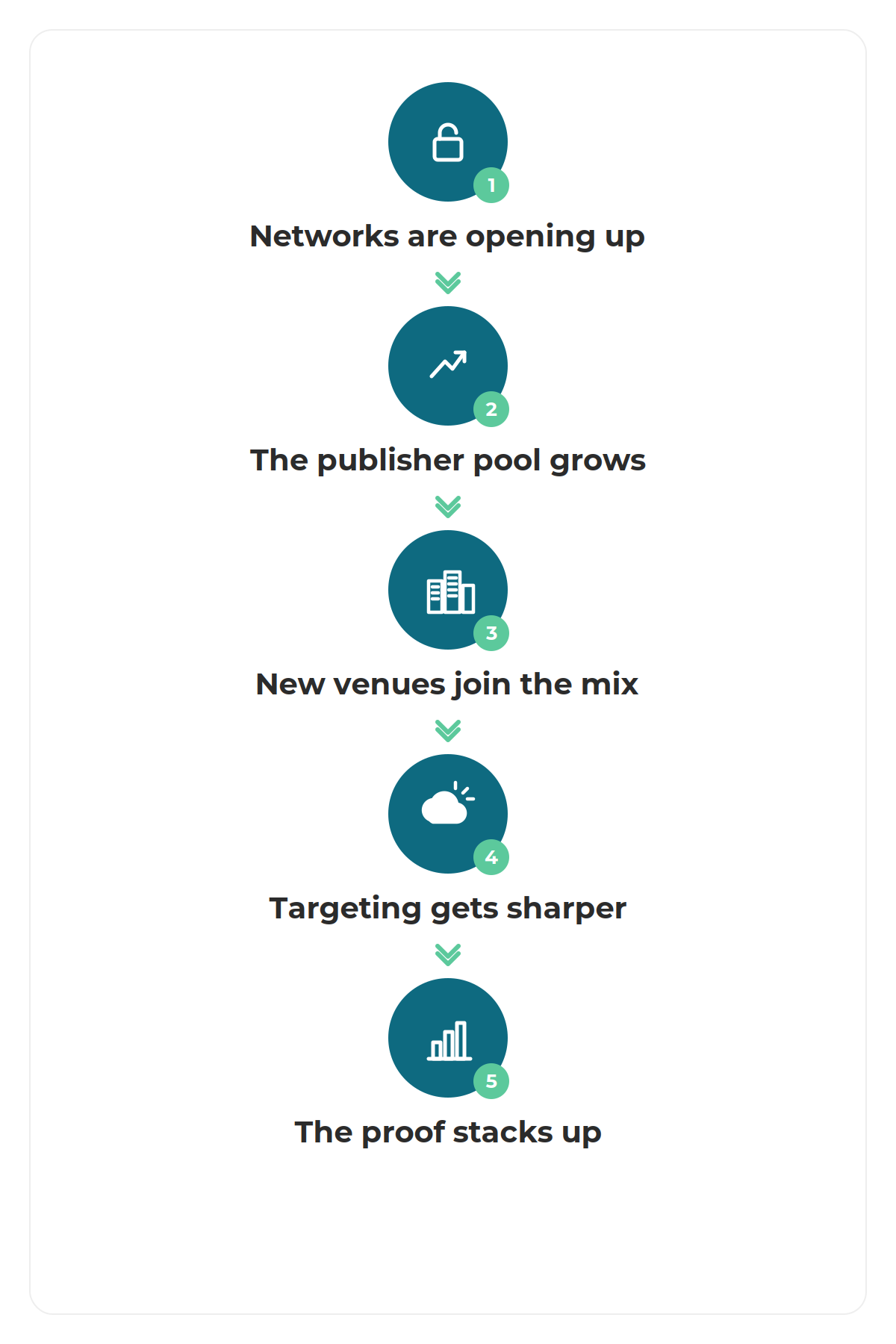
1. Media owners are opening up their networks
This is coming from the supply side as much as the demand side. Media owners are actively pushing more of their networks into programmatic availability, opening up demand from advertisers who would never have picked up the phone to call a traditional OOH sales team.
2. The pool of available publishers keeps growing
As more media owners plug into major supply-side platforms (SSPs), the addressable programmatic inventory keeps expanding, which makes DOOH viable at more budget levels than it used to be.
3. Programmatic supply now reaches far beyond billboards
Screens in gyms, supermarkets, pharmacies, waiting rooms, office buildings, petrol stations and EV charging stations are increasingly available programmatically. The category isn’t just growing, it’s showing up in places it never used to.
4. Targeting has genuinely gotten sharp
Weather, time of day, audience data and behavioural signals are now usable in DOOH in ways that weren’t possible before, not theoretical add ons. That makes the channel relevant to planners who once wrote it off as too blunt an instrument.
5. The case studies have made it a known quantity
As more benchmarks and results circulate, DOOH has stopped looking experimental. That shift shows up in the numbers too: 89% of programmatic DOOH buyers now treat it as standard practice, up from just 37% three years ago (Source: VIOOH, 2026).
Taken together, these five shifts are what’s turning programmatic DOOH from a line worth testing into a line worth planning around.
None of them depend on a single vendor’s forecast holding up, which is exactly why the shift looks durable rather than seasonal.
What sharper targeting actually looks like: Audience Reach Percentage
One concrete example of reason 4 in action is Audience Reach Percentage (ARP), The Trade Desk’s audience first approach to planning DOOH. Traditionally, buyers picked screens by geography and hoped the right people walked past. ARP reverses that. You define your target audience, and the platform shows you where that audience actually concentrates near available screens, then moves your budget there.
Mechanically, ARP scores every screen for every hour of the day. In simple terms, that score is the number of target audience devices seen around a screen, divided by the total number of devices seen around it. A screen surrounded mostly by your audience scores high. A busy screen surrounded mostly by the wrong people doesn’t, no matter how much foot traffic it gets. Screens are sorted into tiers, with Tier 1 being the strongest match, and spend shifts toward the best performing tiers automatically as the crowd around each screen changes throughout the day.
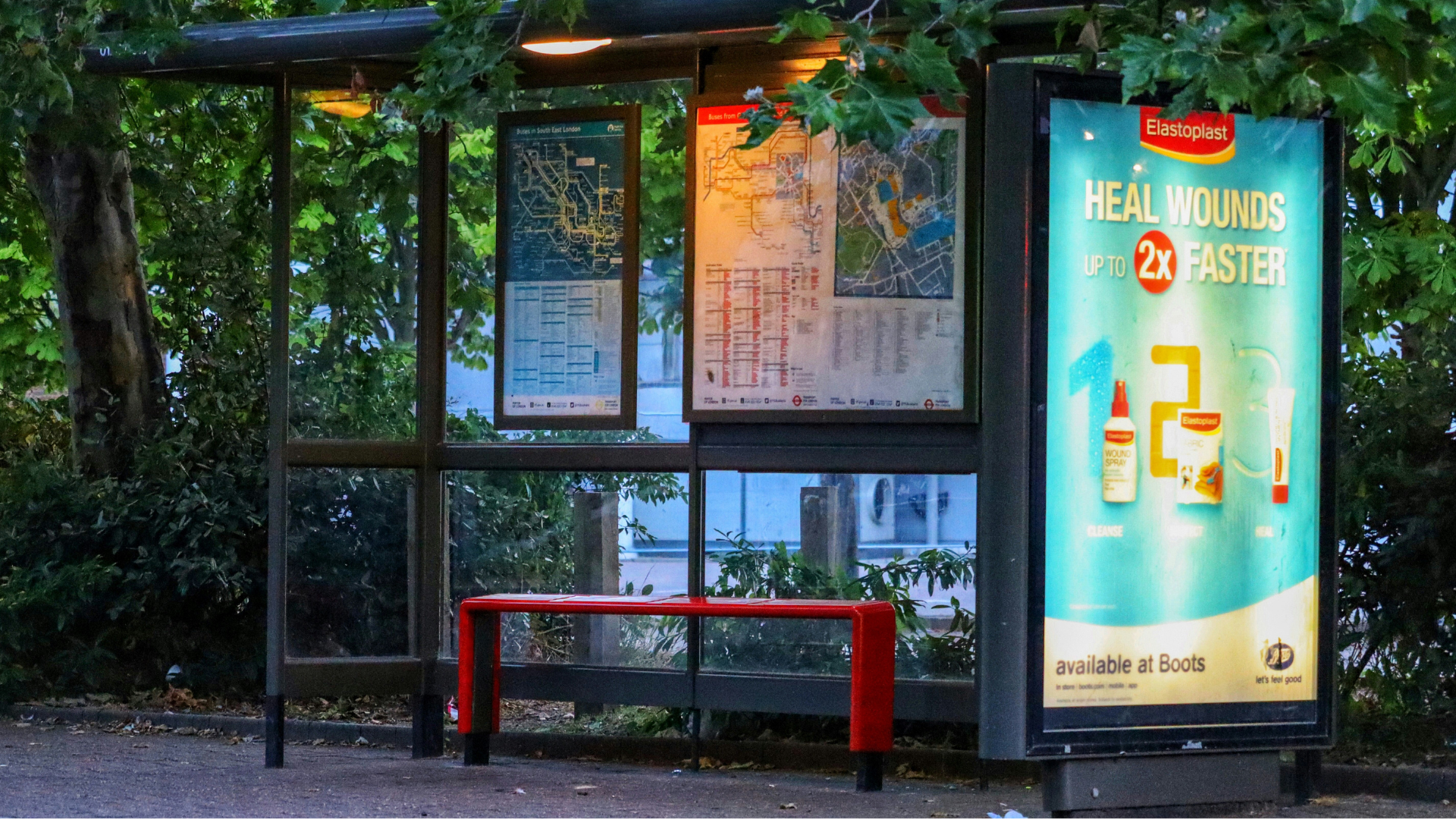
A single example makes it clear. A London bus stop might rank Tier 1 at 8am, busy with commuting young professionals, then slip to Tier 2 by lunchtime as that crowd disperses. The system notices the shift and reallocates spend on its own. MINT Square’s own campaign for VILSA put this to work directly. 90% of impressions landed with the intended audience, and target audience reach rose 60%
The bottom line